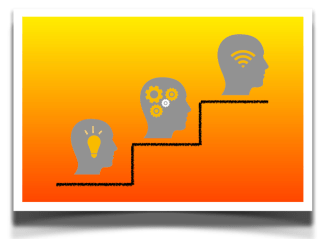
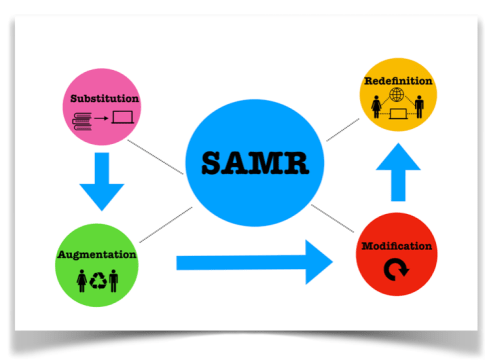
A large part of my journey included making solid and informed decisions on technology tools for learning. It required an understanding of both best practices for instruction and an appreciation of how technology can play a part in influencing high levels of learning. Digital learning tools (both hardware and software) should be evaluated based on their impact on the instruction. If the learning isn’t better because of the addition of technology, then it is just an “add-on”. Keeping both the SAMR and TPAC model in mind ensures a continual focus on instruction versus just using technology as a tool to entertain. If my classroom is becoming arcade with technology…I’m doing it wrong.
The Clark/Kozma debate concerning media delivering the message vs. media influencing the message impacted some of my thinking with technology in the classroom. I tend to believe that the media influences the message if it is chosen appropriately for learning. I read and blogged about an article exploring The New Digital Divide as it pertained to student access vs. student use with technology.
Playing with and evaluating technology tools was important to my learning. Getting my feet wet with lots of tools as I reflected on learning theories and the affordances applications provided to the process was so important to my journey and a new lens through which I could reflect. Reading the book, The Design of Everday Things inspired me to think more strategically about the way I was designing learning experiences with technology and evaluating new tools for the classroom. In my quest to digitize learning I might miss opportunities to empower learners with technology by forgetting that, in most cases, “less is more”.
My reflections on blogging in the classroom, illustrate a new way of thinking for me with online learning. I had never considered the value of blogging. My research and participation in a blog changed my perception. This form of “stream of conscientiousness” paired with the affordance of quick feedback is a great way for students to reflect, respond and challenge each other in their thinking in a safe environment that can be open or monitored depending on the age of the students and the platform being used. Blogging is a strategy that can be leveraged across all content areas and organically creates a scaffolded framework of student understanding.
Creativity Applications for the classroom started as an easy investigation and then became more targeted as I began to think critically about how these applications can impact instruction at high levels and align with my philosophy. Just pulling up “Ka-Hoot” to review for a test was not an option that empowered learners. My new standard required me to think in terms of new learners and how their thinking is wired. Open-ended opportunities that promote production and problem solving versus consumption and entertainment tools was a requirement.
As I explored new applications for learning l began to appreciate the need to empower students through information literacy tools and strategies. Everything we do now on the internet involves a new level of trust and discrimination. It will be important that students have tools and strategies to inform their opinions appropriately. Literacy of information is a skill that is always evolving and changing exponentially over time. I have come to believe that information literacy skills and thinking should be an integral part of all learning across all content areas. I presented a session on digital citizenship to our district leadership and then again at the annual ASCD conference.
Web 2.O Tools in the Classroom
With the number of web tools for teaching and learning available to us growing exponentially, creating and using a rubric for evaluating the value-add of new tools was important for me as I work with teachers on using tech for teaching and learning. As I learned early on… in spite of the vast numbers available, all technology is not created equally. I was purposeful in my web 2.0 unit creation in order to illustrate this idea.
My multimedia presentation outlines my project for supporting Bluebonnet Award-nominated books and advertising them in a library. Glogster allows students to create digital posters with interactive options. No more trips to Michaels for craft purchases! Glogster’s affordances were easy to use in order to put the emphasis on the product and not the tool.
Strategic Planning for Technology in Classrooms
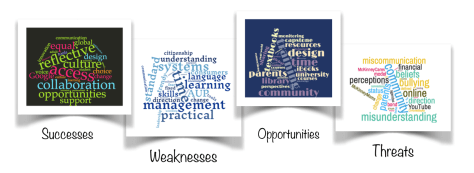
Being a part of selecting technology tools for learning on my campus also included evaluating the tools and the direction our team was heading in the use of the tools. Leaning on our mission and vision for technology on the campus helped me work with a team of teachers to create a strategic plan for our long term work with classroom technology. Our goal in the group was to create a sustainable plan that could ensure growth from all of our stakeholders including parents. Our SWOT Analysis reflected our growth areas and the perceptions we all brought to the table. Leveraging input using a questionnaire from a cross-section of our total community was a valuable data point for our decision making.
Implementation of New Innovations
Working with a research partner and utilizing Everett Rodgers diffusion theory we plotted a strategy to support adult learning with technology in the classroom through job-embedded professional development. Rodger’s theory supported a path to diffuse a new concept over large and diverse populations. The path would ensure “buy-in” and sustainability. Our target audience included a high school faculty in a 1:1 high school who were ready to move to the next level of technology use in the classroom. Using a case study analysis helped me to narrow my focus on the needs of the staff I was researching.
I found this theory to be incredibly interesting (my blog post) because we had unknowingly been using it as we implemented our district’s high school 1:1 and our implementation of a learning management system as well. We were successful in both implementations because we identified and leveraged early adopters (innovators) first and then grew our program from there.
 Lara Lindsey